Course Detail
Web Designing and Development
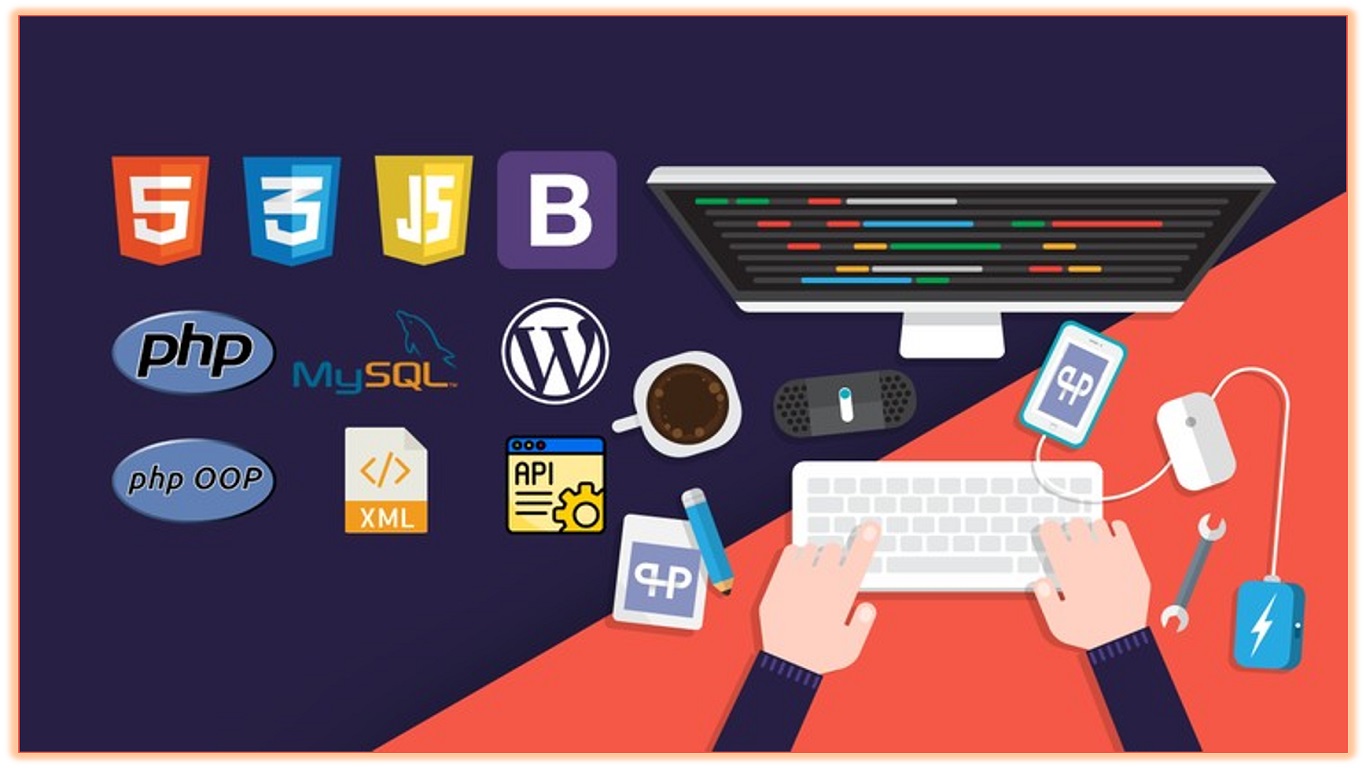
1. Introduction to Web Development:
Understanding the basics of how the internet works, client-server architecture, HTTP protocol, etc.
2. HTML (Hypertext Mark-up Language):
Learning to structure web pages using HTML, including elements like headings, paragraphs, links, images, lists, tables, forms, etc.
3. CSS (Cascading Style Sheets):
Styling web pages using CSS to control layout, colors, fonts, and other visual aspects of a website.4. JavaScript:
Introduction to programming concepts using JavaScript, including variables, data types, operators, control structures, functions, objects, arrays, etc. Understanding how to manipulate the DOM (Document Object Model) to dynamically update web pages.5. Responsive Web Design:
Techniques for creating websites that adapt to different screen sizes and devices, including media queries, flexible grids, and responsive images.6. Frameworks and Libraries:
Introduction to popular front-end frameworks and libraries like Bootstrap, Foundation, React, Vue.js, etc., for building modern and interactive web interfaces.7.Backend Development:
Introduction to server-side programming languages and frameworks like Node.js, Python (Django, Flask), Ruby on Rails, PHP, etc., for building the backend logic of web applications.Introduction to popular front-end frameworks and libraries like Bootstrap, Foundation, React, Vue.js, etc., for building modern and interactive web interfaces.8. Databases:
Basics of database management systems (e.g., MySQL, PostgreSQL, MongoDB) and how to interact with databases using SQL or NoSQL queries.Introduction to popular front-end frameworks and libraries like Bootstrap, Foundation, React, Vue.js, etc., for building modern and interactive web interfaces.9.APIs (Application Programming Interfaces):
Understanding how to consume third-party APIs and develop your own APIs for web applications. Introduction to popular front-end frameworks and libraries like Bootstrap, Foundation, React, Vue.js, etc., for building modern and interactive web interfaces.10.Deployment and Hosting:
Basics of deploying and hosting web applications on servers or cloud platforms like AWS, Heroku, Netlify, etc.Understanding how to consume third-party APIs and develop your own APIs for web applications.11.Project Work:
Hands-on projects to apply the concepts learned throughout the course, culminating in the development of a complete web application.Related Courses

DCA
Diploma in Computer Aplications
Duration: 06 months
4.5
(250)

ADCA
Advanced Diploma in Computer Applications
Duration: 01 Year
4.5
(250)

Computer Based Accounting
Duration: 03 months
4.5
(250)
Web design & development
Duration: 06 months
4.5
(250)

Learn Coding
C/C++, PHP, JAVA, PyThon
Duration: 06 months
4.5
(250)

COMPUTER BASICS
Duration: 03 months
4.5
(250)


